Systems Built for Continuous Daily Cycles
Commercial Garage Openers Installation in Otsego for warehouses, service facilities, and properties requiring heavy-use performance
Commercial garage door openers operate under conditions that would quickly wear out residential systems—dozens of cycles per day, doors weighing hundreds of pounds, and environments where downtime directly affects workflow. The installation process for these systems accounts for load capacity, cycle rating, and operational speed to match the door's size and the facility's usage patterns. D & D Garage Door LLC installs commercial-grade openers in Otsego designed for strength, reliability, and the kind of repetitive operation that defines warehouse and service facility environments.
Proper installation begins with confirming the door's weight and balance, selecting an opener with a duty cycle rating that exceeds the facility's expected daily use, and mounting the unit to structural framing that can support both the motor assembly and the lateral forces generated during operation. Technicians configure the opener's travel limits, force settings, and safety reversing mechanisms based on the specific door type and clearance requirements, then test the system through multiple full cycles to verify consistent performance.
Request an on-site assessment to evaluate door specifications and discuss opener options that align with your facility's operational demands.
Why Commercial Opener Installation Requires Different Standards
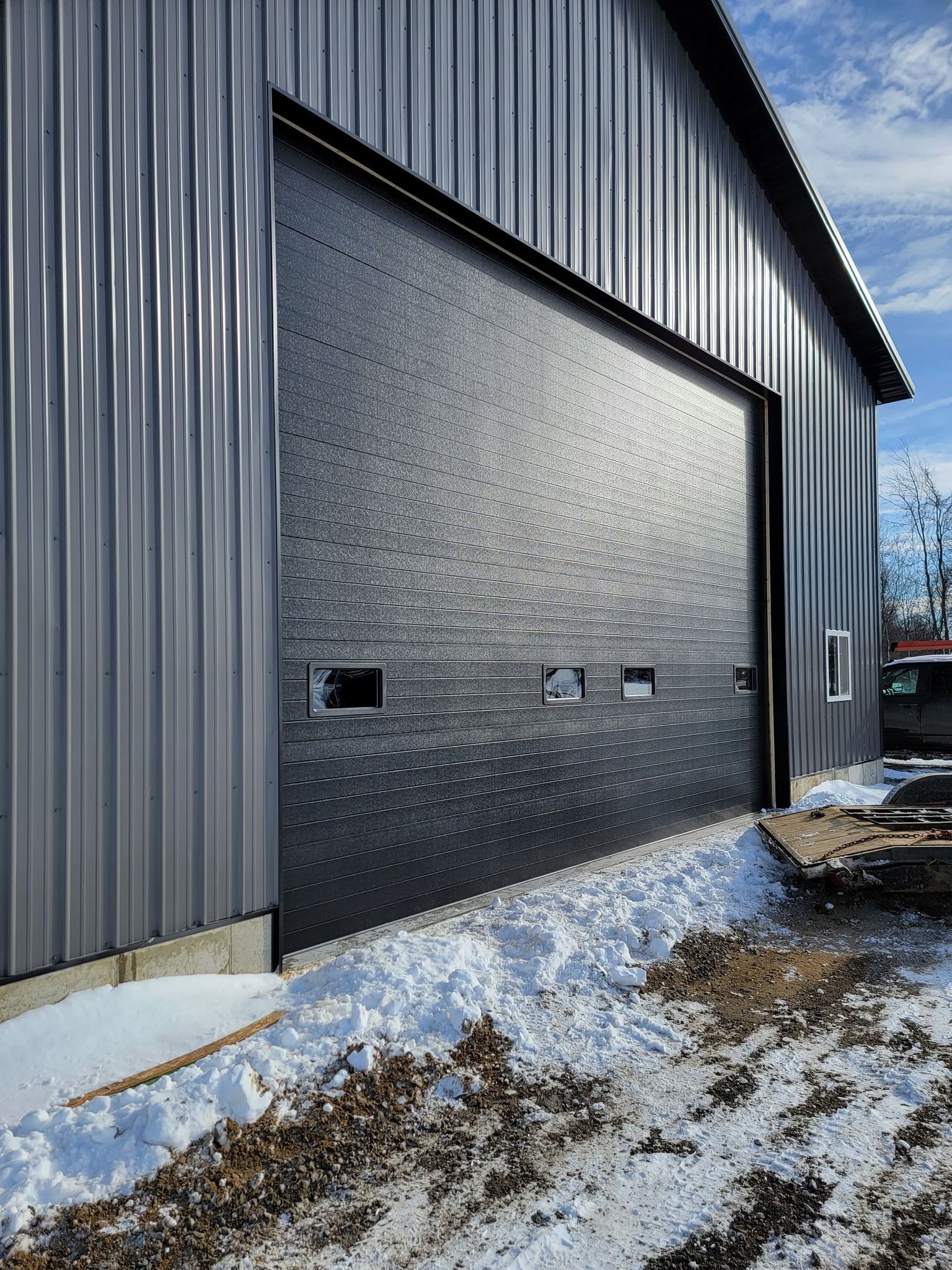
Commercial openers feature larger motors with higher horsepower ratings, reinforced drive components that handle continuous use, and control boards designed to manage multiple door cycles without overheating. The mounting process requires securing the opener to structural beams rather than ceiling joists, as the weight and vibration exceed what residential mounting hardware can support. Electrical configuration often involves dedicated circuits to prevent voltage drops during simultaneous operation of multiple doors.
After installation, the door operates smoothly at the configured speed, stops precisely at the fully open and fully closed positions, and reverses immediately when the safety system detects an obstruction. You'll notice the opener handles the door's weight without laboring, completes cycles quietly despite the system's size, and responds consistently to wall-mounted controls or remote activation. The system performs reliably during peak business hours when frequent access is required.
The installation process includes configuring opener settings to minimize cycle time while maintaining safe operation, which matters in high-traffic environments where door speed affects productivity. Technicians also verify that the safety reversing system meets commercial standards, which require faster response times and more sensitive obstruction detection than residential applications. Ongoing support remains available for maintenance and future service needs as the system ages.
Answers to Frequent Service Questions
Facility managers and property owners in Otsego typically want to understand installation timelines, how opener selection affects long-term performance, and what distinguishes commercial systems from residential models.
What separates a commercial opener from a residential one?
Commercial openers use heavier-duty motors rated for thousands of cycles per year, reinforced chain or belt drives that resist stretching under load, and control systems designed to manage continuous operation without thermal shutdown. The duty cycle rating indicates how many daily cycles the opener can handle before components begin to degrade.
How long does commercial opener installation take?
Installation duration depends on whether the door is already in place and balanced, the complexity of the electrical configuration, and whether structural reinforcement is needed for mounting. Most installations complete within a few hours, though coordinating the work to minimize disruption to business operations may extend the timeline.
Can you install openers on doors with high cycle counts?
Yes, openers designed for industrial applications feature cycle ratings in the tens of thousands per year and include components like oil-bath gear cases and continuous-duty motors that handle extreme use. Selecting an opener with a cycle rating well above your facility's current usage provides a buffer for increased demand.
Why does the opener need a dedicated electrical circuit?
Commercial openers draw significant amperage during startup, especially when lifting heavy doors. A dedicated circuit prevents voltage sags that can cause the motor to overheat or fail to complete the cycle, and it isolates the opener from other facility equipment that could create electrical interference.
What happens if the door isn't properly balanced before installation?
An unbalanced door forces the opener to work harder during every cycle, which accelerates wear on the motor and drive components. Technicians adjust spring tension to achieve proper balance before installing the opener, so the motor only needs to overcome friction and inertia rather than lifting the door's full weight.
D & D Garage Door LLC configures commercial opener systems based on your facility's specific operational requirements and usage patterns. Contact (269) 650-2603 to schedule an installation consultation and discuss system options that match your door's specifications.