Restoring Function When Your Opener Stops Working
Garage Door Opener Repair in Otsego for systems that won't respond, operate inconsistently, or fail to complete cycles
A garage door opener that refuses to respond to the remote, struggles to complete a full cycle, or makes unusual sounds during operation signals a problem that affects daily access to your property. D & D Garage Door LLC provides garage door opener repair in Otsego for systems experiencing motor failures, remote communication issues, or erratic performance patterns. Diagnostic testing identifies whether the problem stems from the motor assembly, the circuit board, the safety sensors, or the drive mechanism itself.
Many opener failures result from worn motor components, misaligned safety sensors that prevent the door from closing, or circuit board issues that interrupt signal processing. In some cases, the problem involves the trolley carriage or drive chain rather than the motor itself. Repairing the specific failing component often restores full function without requiring a complete system replacement, particularly when the opener is less than ten years old and the motor housing remains intact.
Schedule a diagnostic evaluation to determine whether your opener requires component replacement or system-level repair.
What Happens During Opener Diagnostics and Repair
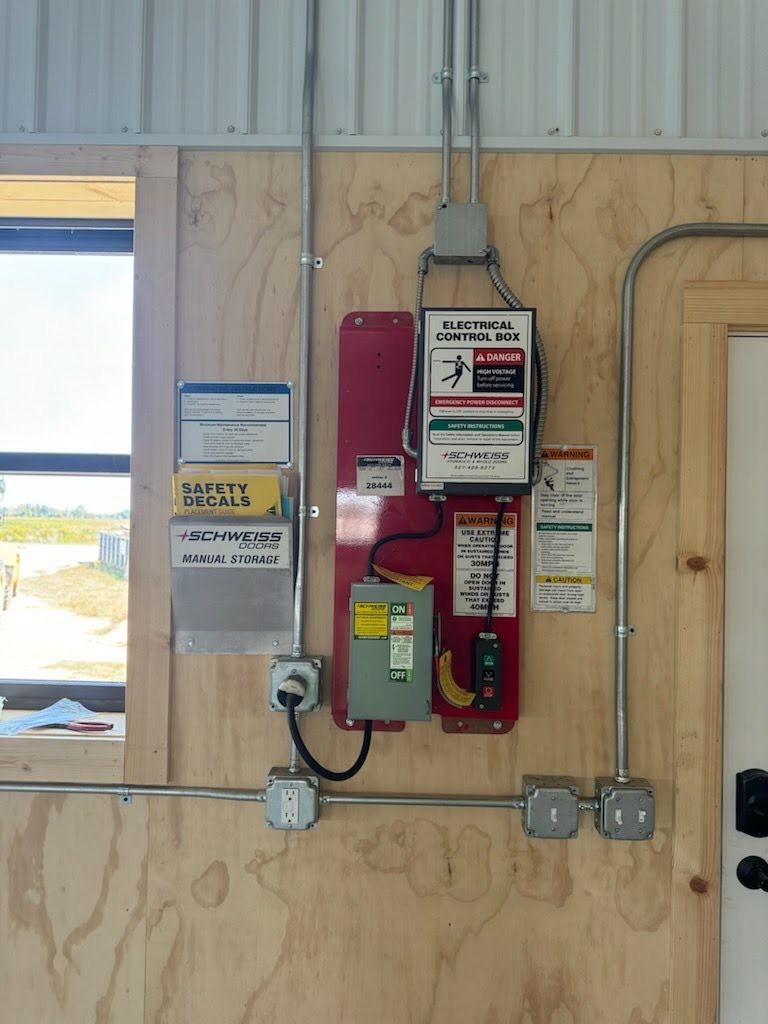
The diagnostic process begins with testing the opener's response to manual and remote commands, checking sensor alignment, and inspecting the motor assembly for signs of overheating or mechanical wear. Technicians measure voltage at the circuit board, test the capacitor if the motor hums but won't turn, and examine the drive chain or belt for proper tension and engagement. This step-by-step approach isolates the root cause rather than replacing parts based on assumptions.
Once the repair is completed, you'll notice the door responds immediately to commands, completes full open and close cycles without hesitation, and operates quietly without grinding or laboring sounds. The remote communicates reliably with the receiver, and the safety sensors reverse the door consistently when an object breaks the beam. The system returns to predictable, daily-use performance.
Opener repairs address the failing component while preserving the rest of the system, which means the logic board, mounting bracket, and rail assembly remain in place if they're still functioning correctly. This approach reduces cost and turnaround time compared to full replacement. Technicians work with a wide range of opener brands and models, including chain-drive, belt-drive, and screw-drive configurations, so compatibility rarely limits repair options.
Questions Before Scheduling Opener Repair
Property owners in Otsego frequently ask about repair timelines, cost differences between repair and replacement, and how to recognize when an opener has reached the end of its functional lifespan.
What causes a garage door opener to stop responding to the remote?
Signal failure typically results from a dead battery in the remote, a malfunctioning receiver on the motor unit, or interference from nearby electronic devices. Technicians test the receiver's response to multiple remotes and check for obstructions or frequency conflicts that block communication.
How do you determine whether an opener should be repaired or replaced?
If the motor housing is cracked, the gear assembly is completely stripped, or the opener is more than fifteen years old with multiple failing components, replacement often makes more sense than stacking repairs. For newer systems with isolated issues, component-level repair restores function at a fraction of replacement cost.
Why does the door reverse immediately after closing starts?
This behavior usually indicates misaligned safety sensors that detect a false obstruction, dirt or moisture on the sensor lenses, or a wiring issue that sends inconsistent signals to the logic board. Realigning the sensors and cleaning the lenses resolves most cases.
Can you repair openers that hum but won't lift the door?
A humming motor without movement points to a failed capacitor, which provides the electrical boost needed to start the motor. Replacing the capacitor restores startup function, though technicians also check for seized gears or a frozen trolley that could cause the same symptom.
What happens if the opener runs but the door doesn't move?
This indicates a disengaged trolley carriage or a broken drive chain or belt that no longer transfers motor power to the door. Repairs involve reconnecting or replacing the drive mechanism and adjusting tension to match the door's weight and balance.
D & D Garage Door LLC provides cost-effective opener repair that addresses the specific failure point while avoiding unnecessary part replacement. Call (269) 650-2603 to arrange a diagnostic appointment and receive a clear assessment of repair options.